


grief counseling For women in portland & throughout Oregon
My Approach
How we’ll work together
What Does Grief Therapy Look Like?
First, we start with where you are right now. We start with what's happening today: What does your life look like? What feels impossible? What are you trying to hold together?
Next we work on:
Making space
For your grief while keeping your life moving. Stopping the care of your family, your mom, your work may not be reasonable. I get that. We'll figure out how to honor your grief and do what needs to be done.
Navigating the triggers
The grocery store moments. The reminders everywhere. The way being with certain people highlights the loss. We'll work on what to do when these hit.
Processing the complicated layers
If the loss was sudden or traumatic, included a complex relationship, or if you're caring for others while barely surviving yourself, we'll work through all of it.
Rebuilding your sense of self
"Who am I without them?" or “How do I be in this world without them?” are questions you might be asking. We'll explore this together without rushing you to have answers.

What do sessions look like with Kathleen?
-
50 minutes weekly to start. If you need more time to process what's coming up, 90-minute sessions are also available.
-
We work at your pace. Some weeks are about survival. Some weeks are about processing. We follow what you need.
-
That would be completely normal! One thing I know for sure is that grief will show up differently for you each week. There may be weeks you might cry the entire session. Sometimes you'll feel numb or angry. The beautiful thing here is there’s no "right way" to use our time together. Whatever you're feeling in that moment is exactly what we'll work with. And just to reassure you a bit more: crying is processing. It's actually one of the ways your body can release stress and help you move through grief.
-
That's normal too. Some people in grief feel numb, shut down, or completely disconnected from their emotions. This doesn't mean you're not grieving or that something is wrong with you. Numbness is one of the ways your brain and body protect you from being overwhelmed. We'll work with whatever shows up, tears, numbness, anger, or nothing at all. It’s all welcome here.
-
Sometimes I might suggest thought experiments or journaling between sessions, but only if that works for you. This isn't about adding more to your plate.
-
Yes! I see clients in-person in Portland and online throughout Oregon. If getting yourself dressed and out the door feels like too huge of an undertaking, we can meet online. For some, getting out of the house is a welcome reprieve, a place to grieve away from those you are attempting to care for.
A Note on My Therapeutic Methods:
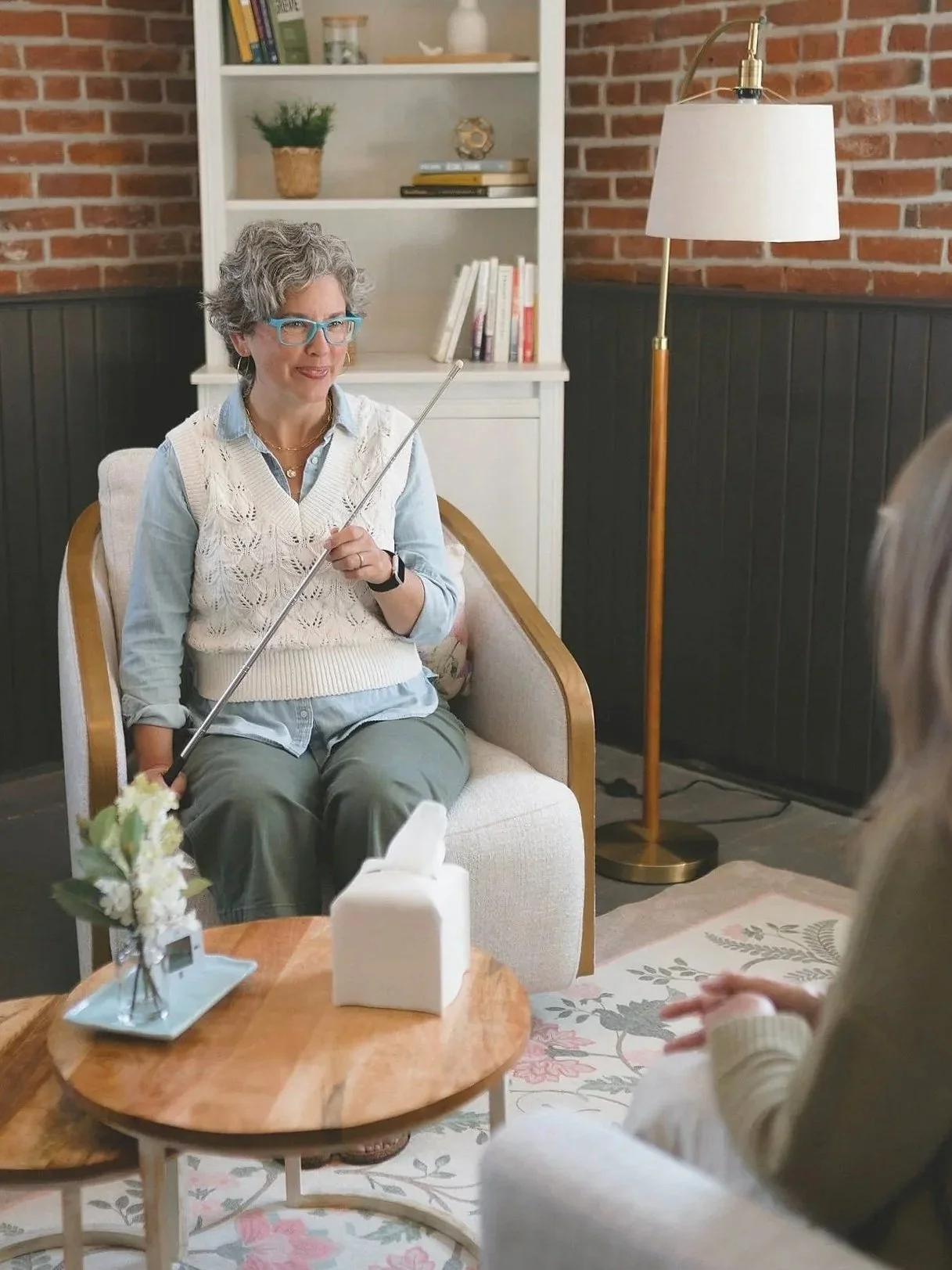
I have training in Internal Family Systems (IFS) and Brainspotting, two approaches that can be effective for processing grief and trauma.
Internal Family Systems (IFS) helps you work with different parts of yourself, the part that's trying to stay strong, the part that's overwhelmed, the part that's angry. In grief, these parts often conflict with each other. IFS helps them work together instead of against you.
Brainspotting processes grief and trauma at a body level. It works without requiring you to verbally relive painful memories. This is especially helpful for sudden or traumatic loss.
I integrate these methods naturally as they fit your needs. .